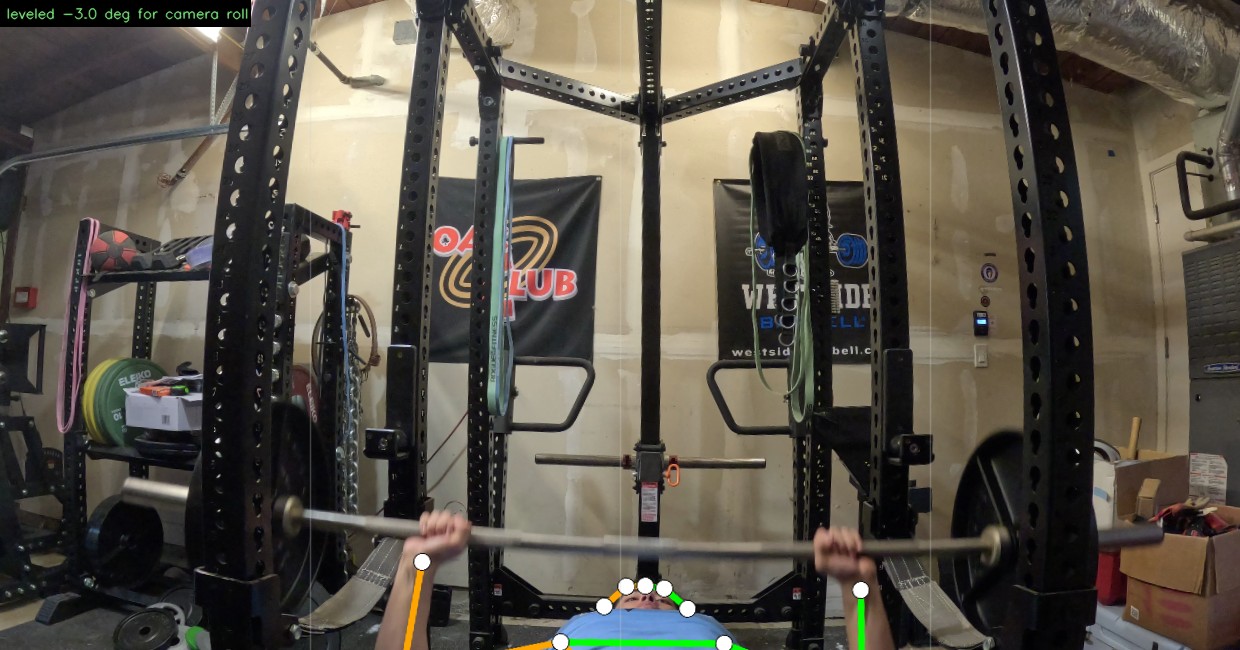
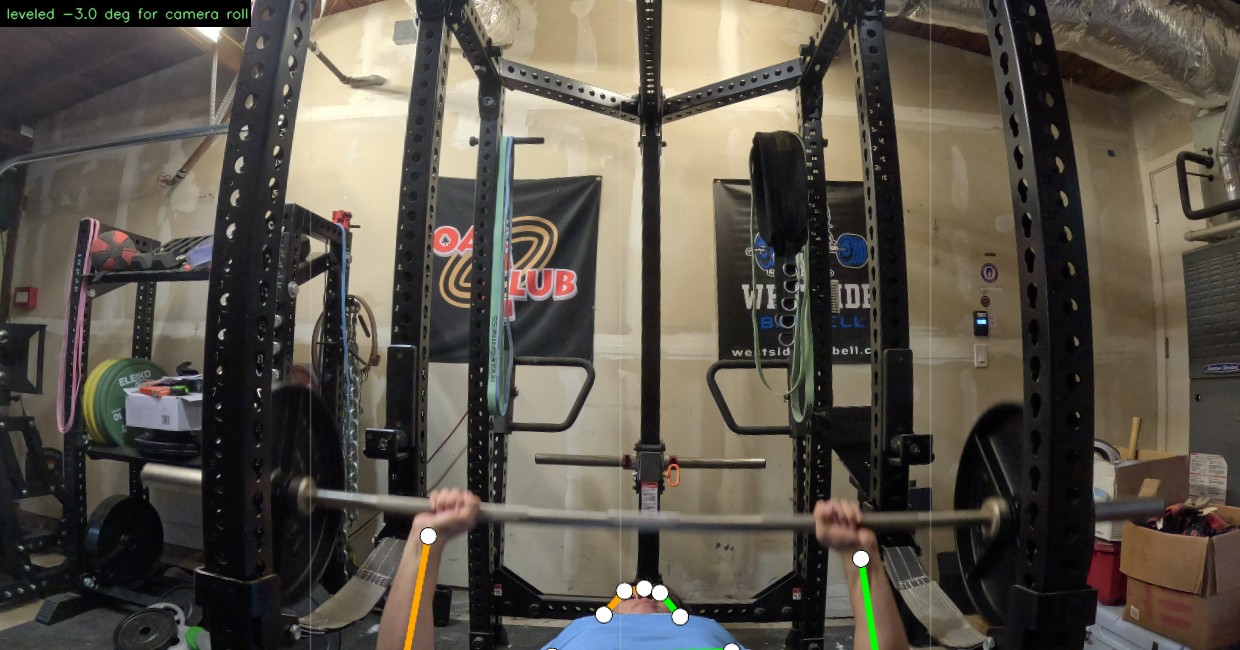
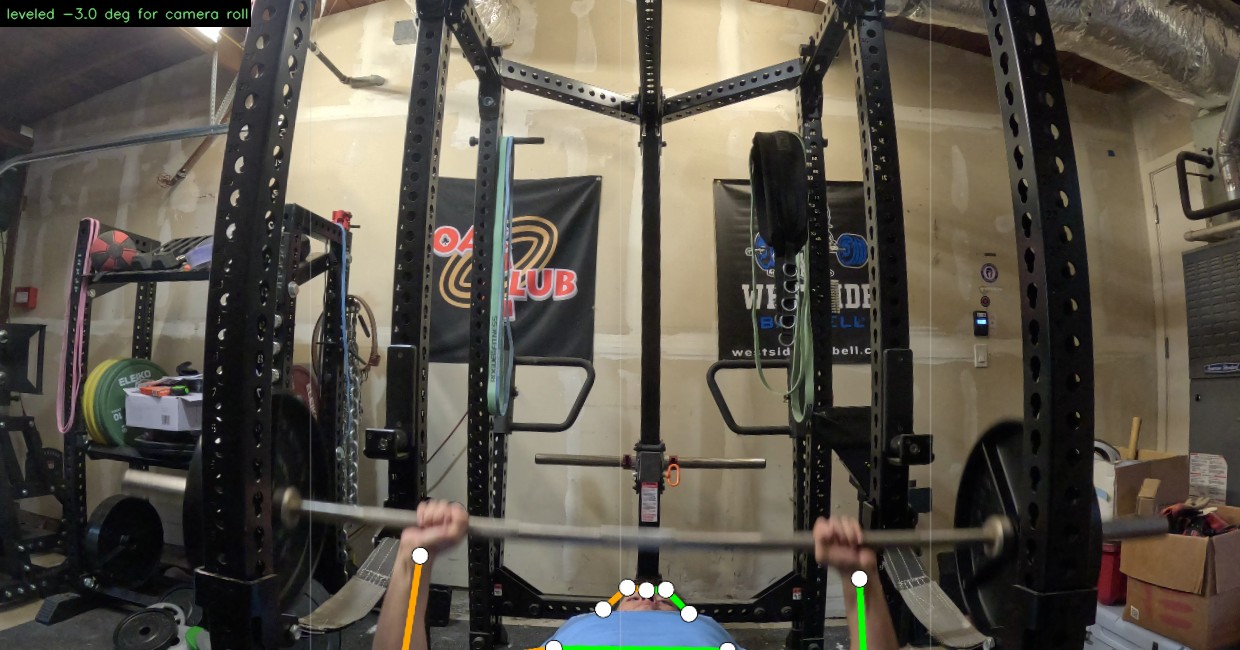
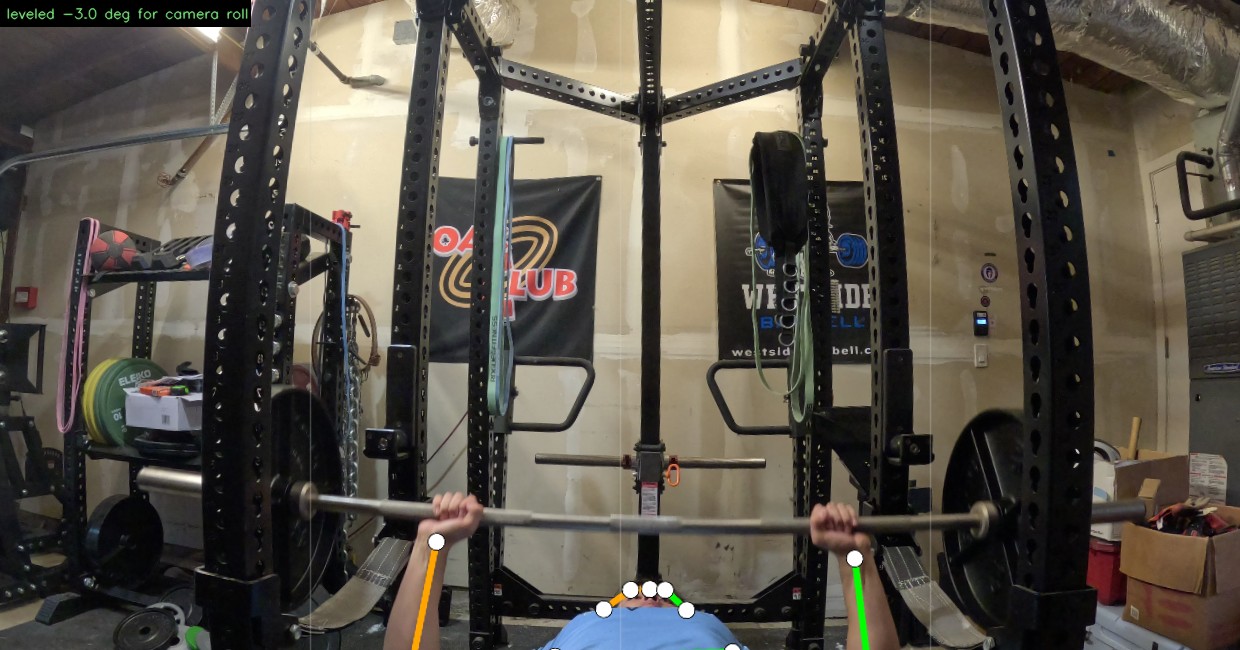
The setPose keypoints drawn on every frame. This is the footage every technique check below is measured from.
Performance
4 Issues1 Clean1 Trade-off1 N/A
Bar control
Issue
Clean and controlled early — straight bar path, no stalls — but the last reps ground to a near-stall at the sticking point as fatigue set in.
Findings 4
Smooth
Descent smoothness
The bar moved up cleanly, with no stalls or direction changes on the way down.
0 reversals
Straight
Side-to-side drift
The bar tracked essentially straight up, with almost no sideways waver.
~2.6% of grip width
Strong
Sticking point · early reps
On the first reps the bar barely slowed at its slowest point on the way up.
~2% below top speed
Grinding
Sticking point · last reps
By the last reps the bar slowed to about a third of its top speed before recovering — a late grind as fatigue set in.
~62% below top speed
Charts 3
Bar height over the set
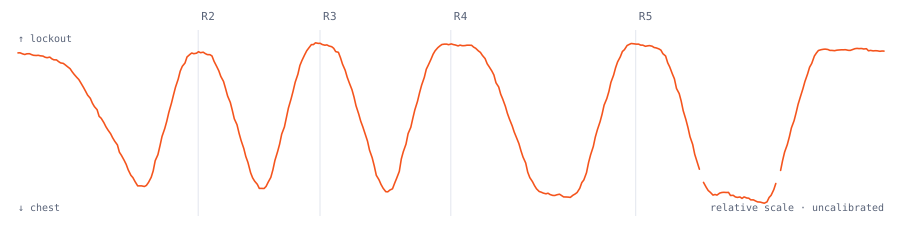
Each peak is a lockout, each trough a touch at the chest. The troughs get wider and flatter on reps 4–5 — the bar spends more time at the bottom as fatigue sets in. Height is a relative scale (uncalibrated) — read the peaks-and-troughs shape, not the values.
Bar velocity over the set
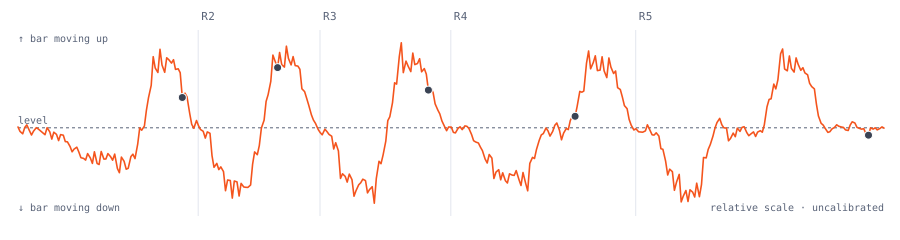
Vertical bar velocity (above the dashed line = moving up). The steel dots mark each rep's sticking-region minimum (slowest point of the press) — the clearest single view of control across the set. Heights are a relative scale (uncalibrated): read the shape and which side of the line, not the absolute numbers — there are none.
Lateral bar position over the set
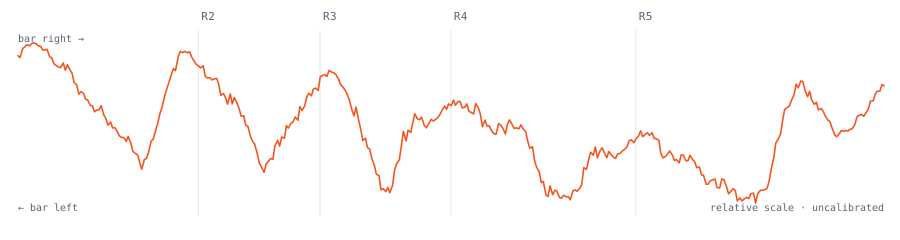
Side-to-side bar position (screen left/right). It stays fairly flat — the bar holds its left/right line (a front view can't show forward/back travel). Relative scale (uncalibrated) — read the flatness, not the values.
Left / right symmetry
Issue
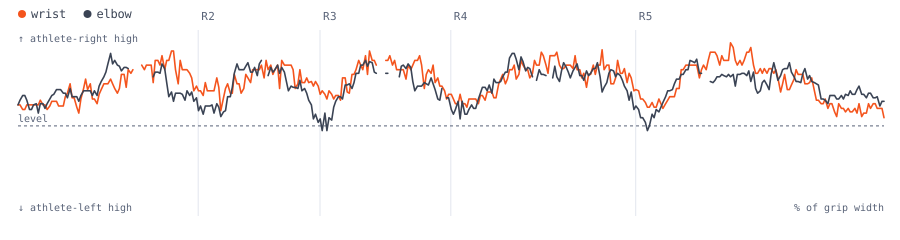
Moderate athlete-right-high tilt on the descent — clearest at MID and near the chest, not at lockout, and consistent across all 5 reps.
Charts 1
Left/right tilt over the set
Wrist (orange) and elbow (steel) tilt as % of grip width; above the dashed ‘level’ line = athlete-right higher. The tilt grows on each descent and returns near level at every lockout.
FixLower the bar under even bilateral control — cue both elbows to descend together and film warm-ups until the bar stays level through the lowering phase.
Evidence
MID rep 3 (14.4s)
MID rep 4 (16.5s)
MID rep 5 (19.2s)
Wrist stacking
Issue
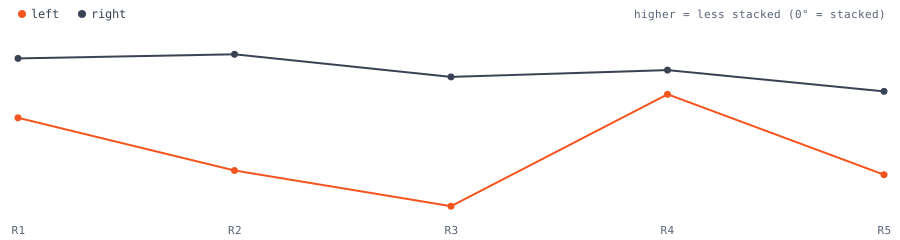
Right forearm leans ~10° vs ~3° left — the right wrist sits notably less over its elbow than the left on every rep.
Charts 1
Wrist stacking by rep (left vs right)
Forearm lean from vertical at each rep's mid-descent — 0° = wrist stacked over the elbow, higher = less stacked. The right line (steel) sits above the left (orange) on every rep.
FixSet the athlete-right hand deeper in the palm and keep the right knuckles stacked over the forearm, so the wrist stays more directly above the elbow on the way down.
Evidence
MID rep 1 (10.6s)
MID rep 4 (16.5s)
MID rep 5 (19.2s)
Tempo
Issue
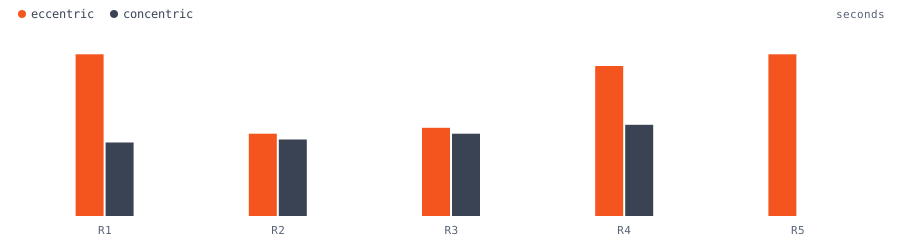
Eccentric 0.9–1.8s, concentric 0.8–1.0s; ~28% rep-to-rep variation, and the descent slows ~28% from the first half to the last — the bar dwells longer at the chest late (fatigue).
Charts 1
Tempo by rep (eccentric vs concentric)
Descent (orange) vs press (steel) duration per rep. The bars change height across the set — ~28% rep-to-rep variation — which is why tempo flags as inconsistent rather than ok.
Touch-point consistency
Clean
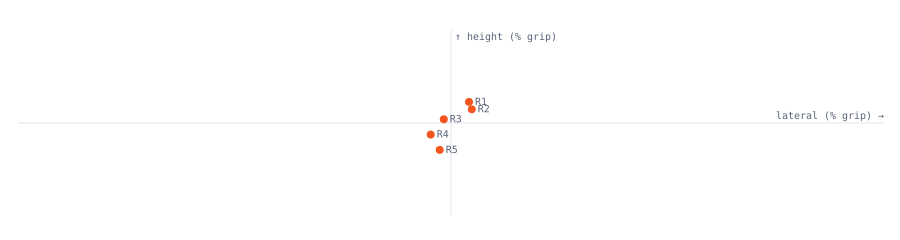
Touch position varies ~1% (lateral) / ~6% (height) of grip width across reps — repeatable.
Charts 1
Touch point by rep (cluster tightness)
Each rep's touch position relative to the set average (lateral × height, % of grip width). The dots sit close together, so touch reads as consistent.
Grip width
Trade-off
~2.03× bi-acromial width (very wide) — a deliberate trade-off, not a fault: more pec leverage, higher shoulder/AC-joint load. Flagged low-confidence (~9.9% rep-to-rep spread on a proxy ratio). Only worth revisiting if shoulder symptoms or excessive elbow flare also show up.
Elbow flare
Not measurable
Not assessable here — at the chest the front-view shoulder & elbow keypoints are low-confidence (occluded); the true tuck angle needs the side view.
Also not measurable from this view — Leg drive, ‘break the bar’ / upper-body tension, shoulder retraction, chest & upper-back tightness, foot position, and forward/back bar path (the J-curve) can't be measured from a front-view pose — they need a side-angle video or a visual review.